

Designing a security screening checkpoint for a high-traffic facility requires more than selecting the right inspection equipment. Airports, railway stations, stadiums, exhibition centers, and government buildings must balance security effectiveness, passenger flow, available space, and operating costs.
A well-designed checkpoint combines appropriate screening equipment, an efficient layout, trained personnel, and clear operating procedures. The goal is to identify potential threats while keeping people moving safely and efficiently.
So, how do you design a security screening checkpoint that meets these requirements?
What Is a Security Screening Checkpoint?
A security screening checkpoint is a controlled entry area where people, baggage, or other items are inspected before entering a facility.
Depending on the site’s security requirements, a checkpoint may include:
Walk-through metal detectors for screening people
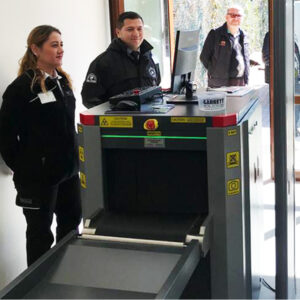
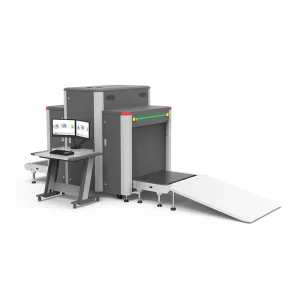
X-ray baggage scanners for inspecting bags and personal belongings
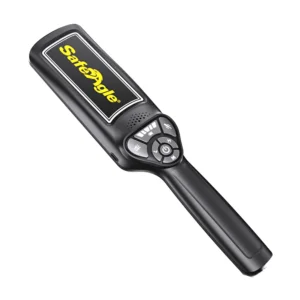
Hand-held metal detectors for secondary screening
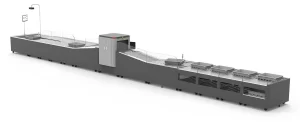
Automatic tray return systems for improving baggage-handling efficiency
Access-control systems and security personnel for managing entry
The equipment configuration depends on the facility’s risk assessment, expected traffic volume, available space, and inspection requirements.
For example, an airport checkpoint may require multiple baggage screening lanes and organized passenger preparation areas, while a government building may need a more compact arrangement with controlled visitor access.

6 Steps to Design an Efficient Security Screening Checkpoint
1. Assess Traffic Volume and Peak-Hour Demand
Start by estimating how many people need to pass through the checkpoint during normal and peak operating periods.
Consider:
Average visitors or passengers per hour
Peak arrival times
Average baggage volume per person
Expected growth in visitor numbers
Time required for secondary inspections
Peak-hour demand is particularly important. A checkpoint that operates comfortably during quiet periods may become congested during major events or commuter rush hours.
As an initial planning estimate:
Required screening lanes = Peak hourly demand ÷ Practical throughput per lane
For example, if a facility expects 1,200 people per hour and one lane can practically process 300 people per hour, the initial estimate is four lanes.
This is only a preliminary calculation. Actual throughput depends on screening procedures, baggage volume, staffing, equipment configuration, and the proportion of passengers requiring additional inspection. A final design should include sufficient capacity for operational variability and equipment downtime.
2. Select the Right Security Screening Equipment
Different technologies serve different purposes. Most high-traffic checkpoints need equipment selected according to the objects being screened and the level of security required.
| Equipment | Primary Function | Typical Applications |
|---|---|---|
 | Screens people for metallic objects | Airports, stadiums, public buildings |
 | Produces images of baggage and parcel contents | Transportation hubs, venues, government facilities |
| Supports targeted and secondary screening | Additional inspections and spot checks |
| Returns screening trays to the preparation area | Airports, high-volume passenger checkpoints |
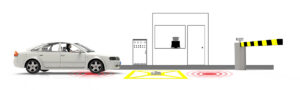 | Assists with vehicle underside inspection | Controlled vehicle entrances and secure facilities |
For many facilities, combining walk-through metal detectors with X-ray baggage scanners creates a practical starting point for screening people and their belongings.
Additional equipment should be selected according to the site’s specific security risks and operational requirements.
Safeagle provides security inspection equipment covering X-ray baggage screening, walk-through metal detection, hand-held metal detection, and other security applications.
3. Design the Checkpoint Layout for Smooth Passenger Flow
Equipment selection alone does not determine throughput. The physical layout can have an equally important effect on how quickly people move through the checkpoint.
A typical passenger screening process includes five stages:
Queueing: Visitors wait in an organized line before screening.
Preparation: Visitors place bags and personal belongings into trays.
Inspection: Baggage passes through an X-ray scanner while people pass through the designated personnel screening system.
Resolution: Security staff conduct additional checks when necessary.
Collection and exit: Visitors collect their belongings and move away from the screening area.
The layout should minimize unnecessary backtracking and prevent people collecting their belongings from blocking those who have completed screening.
Where space permits, separate the preparation area from the post-screening collection area. Clear signs, barriers, and designated walking routes can also help reduce confusion.
For high-volume checkpoints, consider the location of tray return equipment, secondary inspection areas, staff workstations, and emergency exits during the planning stage.
4. Improve Baggage Handling and Tray Management
Baggage preparation can become a bottleneck when visitors need to collect trays, remove personal items, and reorganize their belongings.
An automatic tray return system can help streamline this process by returning empty trays to the preparation area.
Potential benefits include:
Less manual tray handling
A more organized preparation area
Reduced interruptions caused by tray shortages
More consistent baggage preparation
Improved workflow at busy checkpoints
For facilities with high passenger volumes, integrating an automatic tray return system with X-ray baggage scanners can help create a more continuous screening process.
The system should be selected according to the number of screening lanes, available floor space, tray dimensions, and expected operating volume.
Safeagle offers automatic tray return solutions for security screening environments that need more organized tray handling.
5. Plan for Secondary Screening and Unexpected Delays
Even a well-designed checkpoint will occasionally need additional inspections.
A baggage image may require closer examination, a metal detector may generate an alarm, or a visitor may need assistance with the screening process.
If these situations are handled directly in the main traffic lane, they can slow down everyone behind the affected visitor.
A more efficient design provides a designated area for secondary screening, where authorized personnel can conduct additional checks without unnecessarily interrupting the primary flow.
Checkpoint planners should also consider:
Procedures for alarm resolution
Staff responsibilities
Communication between screening positions
Equipment maintenance and downtime
Accessible screening arrangements
Emergency response procedures
The aim is not to eliminate every delay, but to manage exceptions without allowing them to disrupt the entire checkpoint.
6. Evaluate Total Operating Costs
The lowest equipment purchase price does not necessarily produce the lowest long-term cost.
When comparing security screening solutions, consider the total cost of ownership, including:
Initial equipment investment
Installation and commissioning
Operator training
Routine maintenance
Spare parts and technical support
Energy consumption
Expected service life
Downtime and its operational impact
Equipment reliability and supplier support are particularly important in high-traffic facilities, where extended downtime can affect security operations and create queues.
Before purchasing, confirm the equipment specifications, warranty terms, maintenance requirements, and availability of technical assistance.
How Many Security Screening Lanes Does a Facility Need?

There is no universal number of screening lanes for every facility.
The required number depends on peak traffic demand, practical lane throughput, inspection procedures, staffing, and the percentage of visitors who require additional screening.
A simple preliminary estimate is:
Number of lanes = Peak hourly traffic ÷ Practical hourly throughput per lane
For example:
| Peak Traffic | Assumed Practical Throughput per Lane | Preliminary Lane Estimate |
|---|---|---|
| 300 people/hour | 150 people/hour | 2 lanes |
| 600 people/hour | 200 people/hour | 3 lanes |
| 1,000 people/hour | 250 people/hour | 4 lanes |
| 1,500 people/hour | 300 people/hour | 5 lanes |
These figures are illustrative planning assumptions, not guaranteed equipment performance figures or universal industry benchmarks.
Actual throughput should be validated through site-specific analysis, operational data, and, where appropriate, pilot testing. Designers should also allow for peak surges, secondary inspections, staff breaks, and equipment maintenance.
How to Choose Equipment for Different Facilities

Different environments have different priorities. The checkpoint design should reflect the site’s function rather than use the same configuration everywhere.
Airports and Railway Stations
Transportation hubs often experience concentrated passenger demand and strict screening requirements.
Typical priorities include high-throughput baggage inspection, organized passenger preparation, effective queue management, and sufficient space for secondary screening.
X-ray baggage scanners, walk-through metal detectors, and automatic tray return systems may be combined according to the terminal layout and screening procedures.
Stadiums and Exhibition Centers
Large events can produce sudden surges in visitor arrivals, particularly before opening times or major performances.
Checkpoint planners should prioritize flexible lane arrangements, clear visitor routing, sufficient staffing, and rapid resolution of alarms.
Portable screening equipment may also be useful where security arrangements change between events.
Government Buildings and Corporate Facilities
These facilities may place greater emphasis on controlled access, visitor management, and the protection of restricted areas.
Depending on the risk assessment, a checkpoint may combine baggage inspection, metal detection, visitor registration, and access-control procedures.
The design should provide an appropriate balance between security, available space, and the visitor experience.
Logistics Centers and Cargo Facilities
Cargo and parcel inspection differs from passenger screening because packages can vary considerably in size, weight, and material composition.
Equipment selection should account for package dimensions, conveyor load capacity, inspection requirements, and expected parcel volume.
Facilities handling large items may require larger-aperture X-ray screening systems rather than standard carry-on baggage scanners.
Why Work with an Experienced Security Equipment Manufacturer?
A successful checkpoint depends on more than individual equipment specifications. Buyers also need to consider system compatibility, site requirements, installation, training, and long-term support.
An experienced manufacturer can help project teams evaluate equipment options based on:
Required screening functions
Expected traffic and baggage volume
Available installation space
Equipment specifications and interfaces
Maintenance and support requirements
Project-specific customization needs
Safeagle supplies security inspection equipment for different applications, including X-ray baggage scanners, walk-through metal detectors, hand-held metal detectors, and automatic tray return systems.
For international projects, buyers should confirm the manufacturer’s available technical documentation, installation requirements, warranty coverage, training arrangements, and after-sales support before finalizing the equipment configuration.
Explore Safeagle’s security inspection equipment to review available solutions for different checkpoint requirements.
FAQs
What equipment is needed for a security screening checkpoint?
A typical checkpoint may use walk-through metal detectors to screen people and X-ray baggage scanners to inspect their belongings. Hand-held metal detectors can support secondary screening, while automatic tray return systems can improve baggage preparation and handling at busy checkpoints.
The exact configuration depends on the facility’s risk assessment and operating requirements.
How can a security checkpoint reduce waiting times?
Waiting times can be reduced by matching the number of screening lanes to peak demand, improving queue and baggage preparation layouts, providing sufficient trained staff, and separating secondary inspections from the main screening flow.
Automatic tray return systems may also help reduce interruptions caused by tray handling.
How do you calculate the number of screening lanes required?
Divide peak hourly traffic by the estimated practical throughput per lane to obtain an initial lane estimate. The result should then be adjusted for secondary inspections, peak surges, staffing, equipment downtime, and the site’s operating procedures.
Are X-ray baggage scanners and metal detectors enough for every facility?
Not necessarily. Different facilities face different security risks. Some may require additional inspection technologies, access-control systems, vehicle inspection equipment, or other measures identified by their security assessment.
What should buyers consider when selecting a security equipment supplier?
Evaluate product suitability, technical specifications, reliability, warranty coverage, training, spare parts, technical support, and the supplier’s ability to meet project requirements. The lowest initial price should not be the only selection criterion.
Conclusion
Designing an efficient security screening checkpoint requires a coordinated approach to equipment selection, traffic planning, layout design, staff procedures, and long-term operating costs.
The most important steps are to assess peak demand, select appropriate screening technologies, organize passenger and baggage flow, plan for secondary inspections, and verify that the proposed configuration can meet real operating requirements.
For high-traffic facilities, integrating X-ray baggage scanners, walk-through metal detectors, and automatic tray return systems can help create a more organized screening process when the equipment and layout are properly matched to the site.
Safeagle provides security inspection equipment for transportation hubs, public venues, government facilities, logistics centers, and other applications. By evaluating the project’s requirements before selecting equipment, facility operators can develop a screening checkpoint that supports both security objectives and efficient daily operations.
Looking For Security Inspection Solutions?
As an excellent manufacturer providing full public safety solutions. Our product range includes X-ray Baggage Scanners, Walk-Through Metal Detectors, Handheld Metal Detectors, and Vehicle Inspection Systems, etc.
Need help selecting the right equipment? Contact our team to discuss your application and request a customized solution.